
Who can play, and what that age limit actually means
Slots of Money is restricted to players who are 19 or older across most of Canada, with the threshold lowered to 18 in Alberta, Manitoba, and Quebec. This isn't a suggestion built into casino terms and conditions — it's the legal minimum in each province, checked at account verification. If you're helping a younger family member or friend set up an account, don't. Age verification exists precisely because slot mechanics — spinning reels, near-misses, free spins triggered by scatters — are built to feel good regardless of the player's age or judgment, and the law draws the line accordingly.
A practical routine for playing this slot without losing track
Start with a number, not a feeling. Slots of Money runs on a medium-volatility model with a reported RTP around 96%, which means losing streaks are normal and expected, not a sign that a big win is due next spin. Decide on a session budget in real currency terms — say $20 or $50 — before you open the game, and treat that number as the whole session, not a starting point you can top up when it runs out.
Set a time limit alongside the money limit. Because the game's free spins and gamble/double feature are designed to keep a session going, it's easy to lose track of how long you've been playing. A simple phone timer for 20 or 30 minutes works better than trying to judge time by how the reels feel. When the timer goes off, stop — even mid-bonus-round.
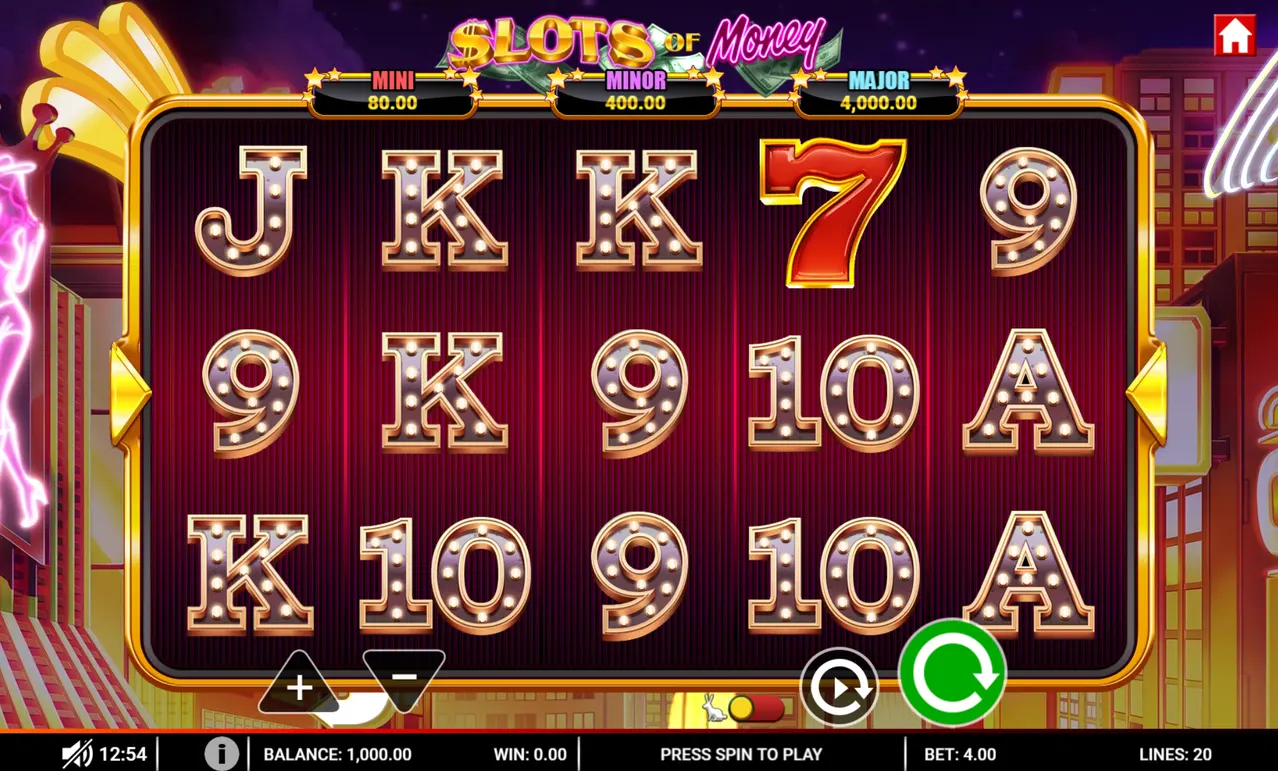
Use the demo version first if you haven't played Slots of Money before. Most casino and affiliate sites hosting the game offer a free-play mode with no real money involved, which lets you see how the 20-payline structure, wild substitutions, and scatter-triggered free spins actually behave before you commit a deposit to them.
Separate wins from your budget the moment they happen. If a free spins round or the gamble feature pushes your balance up, decide immediately whether that's money you're cashing out or money you're willing to lose back into further spins — don't let the decision get made passively by just continuing to play.
If you're playing in Canada, be aware that this specific title has patchy operator coverage in the Canadian market — some databases show it as unavailable through mainstream Canadian-facing casinos. That's a market-availability quirk, not a responsible-gambling issue, but it's worth confirming your operator is properly licensed for your province before you deposit anything.
If session limits, budgets, and timers stop working — if you find yourself extending them, hiding play from people close to you, or chasing losses — that's the point to step back and use tools built for this: self-exclusion programs, deposit limits through your operator, or organizations like the Canadian Centre for Gambling Research and provincial responsible-gambling helplines.